Showing posts with label Yuji Naka. Show all posts

Tuesday, December 25, 2012

A Merry Sega Racer Christmas To You

Merry Christmas you bastards, now here's my NOT AT ALL HASTILY MADE Christmas card (two hours of this BS).


Outside the famous Daytona International Speedway, the Sega gang is all here for the big Sega race, giving away free Dreamcast 2 consoles to all attendees!!!

I wish.....


EDIT: I really should've done this sooner but here goes.
LIST OF PEOPLE/CHARACTERS FOR INFORMATIVE PURPOSES:

Toshihiro Nagoshi: Tan dude with white shirt/pants, dead center.  Producer of Daytona USA, Super Monkey Ball, F-Zero GX, and Yakuza.  Currently the Main Creative Director of Sega in general.

Yu Suzuki: Smiley guy at bottom right.  Producer of OutRun, Hang-On, Virtua Racing, Virtua Fighter, and Shenmue.  Considered "best game producer ever" by many Sega fans for bolstering their arcade division to first-class.

Tetsuya Mizuguchi: Guy on bottom left in a pink shirt sitting down.  Producer of Sega Rally, Sega Touring Car, Space Channel 5, Rez, and Lumines.

Yuji Naka: Guy on right center in white suit.  Producer of many Sega hits including Sonic the Hedgehog, NiGHTS, Phantasy Star, Billy Hatcher, and Burning Rangers.

Danica Patrick: Lady in blue racing suit, dead center.  Drove the Sega Sonic car at Texas Nationwide Race.  Spokeswoman for Sonic & All-Stars Racing Transformed.

Takenobu Mitsuyoshi: Guy in upper left with yellow shirt and mic.  Sega composer and infamous vocalist of Daytona USA soundtrack ("Rolllingggg sttttarrrrttttt!!!").

Makoto Osaki: Guy in blue shirt, upper center.  Director for Daytona USA 1/2, Scud Race, OutRun 2, and Virtua Fighter.  One of the main guys who fine-tuned these games so damn well but gets no credit.

Hajime Satomi: Guy on TV, lower left.  Founder of Sammy Corporation and current owner of Sega.  Rumored to be a leader of the Yakuza.  Nobody likes him.

Ryo Hazuki: Guy in brown leather jacket and jeans, dead center.  Main protagonist of Shenmue 1 and 2.  Knows martial arts.  Trying to avenge his father's death.

Segata Sanshiro: Judo guy in center of image, arms crossed.  Infamous fictional spokesman for Sega Saturn, known for beating up people who don't play the Saturn and deflecting a giant missile from destroying Sega HQ.

Jennifer, Alberto, Clarissa, Holly: Four people standing on left in front of presents.  Alberto is the "protagonist" of OutRun 2.  The three girls are you passengers for OutRun, Heart Attack, and Mission Modes, respectively.

Hornet Classic: Red and blue car on left center.  Based off a '94 Chevy Lumina, it's infamous stock car from Daytona USA.  Also appears in Fighters Megamix (a fighting car), Ridge Racer Vita (as DLC), and Sonic & All-Stars Racing: Transformed (unlockable character).

Sonic the Hedgehog: Upper center.  Everyone knows who this is.

Axel, B.D. Joe, Gena, Gus: Four guys on right center side of screen.  The four playable characters from the original Crazy Taxi.  Racing around town, catching big air, making huge tips along the way heading for KFC and Pizza Hut.

Ornaments: Cars from the following Sega games from top to bottom--Unicorn from Daytona USA 2001 (DC), Toyota Celica from Sega Rally, Ferrari F40 from Scud Race/Sega Super GT, Phantom Full Force from Daytona USA 2, F1 car from Virtua Racing.

Dreamcast 2: Poster in upper left corner.  Not real (of course) but all Sega fans want to see this (you do too, just admit it).  Rumored to exist through Sega's Ringedge/Ringwide hardware but it's pure speculation.

Sumo Digital: Tiny poster in center of screen.  Game company from Sheffield, UK responsible for porting OutRun  and Sega Rally Online Arcade to XBLA/PSN.  Also made Sega Superstars Tennis and both Sonic All-Stars Racing games.  Considered one of the last bastions of Sega goodness remaining on Earth.

Daytona International Speedway: Backdrop to this image (crap but there's so much stuff in the way so w/e). Located in Daytona Beach, Florida, USA, it opened in 1959, it's home to the most prestigious race in NASCAR (Daytona 500) and lends its name to Sega's 1994 arcade game Daytona USA.

THE MORE YOU KNOW...

Get the full size image off deviantART (please favorite!!!).  Sonic Claus fanart attribution.  Remember to keep Christ in Christmas and have a super day with family & friends.  Oh, and Happy New Year too.

Monday, July 2, 2012

Sega & Midway Similarities: The Death Of Gaming Giants

I read a good article on SEGAbits detailing five reasons for Sega's recent woes and they are as follows:

1. Poor marketing
2. Poor scheduling
3. Terrible games from '05 to '08
4. Terrible Marvel games
5. Too many new IP's, not enough old ones

Right now we are all bummed out about Sega.  But I cannot get too upset anymore.  This is to be expected for Sega.  I'm hoping this is a cathartic stage in that they'll turn around, albeit they'll have nothing to show for the next couple of years besides Football Manager and a few more Dreamcast ports.  But you never know cause just when I think they couldn't be any dumber, they either totally redeem themselves or reach unprecedented levels of dumb-ness.  It's a game of Chutes & Ladders and I can't guess where they'll be in 5-10 years.

And now for your feature presentation...


I did some research on Midway (and Atari and Williams) Games a few months ago.  I should've brought it up sooner but now is a good time.  You see, Sega and Midway had a lot of common.  See this:

*  Both were old-school distributors of arcade/amusement hardware, including slot machines, jukeboxes, and eventually bona-fide arcade cabinets.

* Both had their own "League of Legends."  Midway: Ed Boon, John Tobias, Eugene Jarvis, and Mark Turmell.  Sega: Yu Suzuki, Yuji Naka, Toshihiro Nagoshi, Tetsuya Mitzuguchi.

* Both were prolific at arcade games.  Both had their own lines of fighting, shooting, and (lots of) racing games.  Mortal Kombat<->Virtua Fighter.  Maximum Force & Area 51<->Virtua Cop.  San Francisco Rush, Cruis'n Everything, Super Sprint, Spy Hunter, Hydro Thunder, STUN Runner<->Virtua Racing, Daytona, OutRun, look on the right side of the screen.

* Both were known for pushing the envelope in terms of edginess.  While Sega had Sonic, Streets of Rage, Toejam and Earl, and all that "Sega does what Nintendon't" bullcrap, Midway had Mortal Kombat, Rampage, Smash TV, NBA Jam, and NFL Blitz.

* In the turn of the millennium, both  got hit hard by the decline in arcades.  In '99, Midway stopped manufacturing pinball machines and in '01, stopped manufacturing arcade games altogether.  Sega also suffered the same fate but at a much slower pace (i.e. AM2 released OutRun 2 and Ghost Squad in '04, Sega still continues to make arcade hardware--Ringedge & Ringwide--though it's awfully underutilized).

* Both were "bailed out" by private investors following the arcade heyday.  In '03, American media magnate Sumner Redstone bought a majority of Midway's stocks.  In that same year, Sammy Corporation bought out Sega.

* Both their "League of Legends" bailed out to create new studios.  John Tobias left to create Studio Gigante.  Eugene Jarvis left to create Raw Thrills.  Yu Suzuki left to create YS Net.  Yuji Naka left to create Prope.  Tetsuya Mitzuguchi left to create Q Entertainment.

* Both lost a s***-ton of money & prestige during that period.  Sega obviously lost billions for years after the Dreamcast debacle.  Midway lost $115 million in '03 as they began shutting down studios, including Midway Games West and Midway Adelaide, that same year.

* Both published a ton of mediocre games since then.  In Midway's case, this included BlackSite: Area51, Vin Diesel's Wheelman and Psi-Ops.  In Sega's case, the Marvel games are a great example.

However, unlike Sega, Midway actually did go bankrupt.  In '07 and '08, there was a revolving door of higher-ups getting their asses kicked out the door.  In '09, Midway defaulted on its $240 million debt and crumbled into a million pieces only to be devoured by Warner Bros. for a measly $49 million.  At that point, Midway's stock were worth less than a dollar.  Rumor has it that whatever remaining Midway execs were devouring caviar and wine while "Rome" burned.

If there's any good news to be had post-Midway, it's that their franchises aren't completely dead.  High-quality Mortal Kombat games are still being produced by Warner Bros.  NBA Jam and NFL Blitz got remakes from Electronic Arts.  Hydro Thunder got a remake for Xbox Live.  And, love it or hate it, the Cruis'n games made a comeback in the form of multiple Fast & Furious games for arcades (including a terrible Wii port).

The good news is that Sega's "death" has been a much slower process, mostly because Sega still has Japan's support while Midway only had America to rely on.  I only hope that Sega learns from Midway in that they aren't eating the caviar while their company continues to die.  I think the changes  they've made says "Well, we know we suck but at least we're going to do something about it," which demonstrates more maturity than Midway ever did IMO.

Also, I was thinking about Sega and what we would do if they actually did perish from this earth.  Would it be THAT terrible?  All those IP's don't just disintegrate into thin air--they are still in existence.  Midway's prime IP's still get love today.  Who's not to say Sega's old IP's couldn't get the same recognition?  Maybe someone else will give Sonic their dues.  Maybe someone else will actually bring back Daytona.  Maybe Yu Suzuki will be able to make Shenmue 3 no longer bounded by the shackles of Sega-Sammy.

To be disappointed with Sega's death would mean to be disappointed that they missed the opportunity to return to "glory."  Yet clearly as of their condition today and the trends in game design it's very unlikely this'll occur even if they remain alive for a long time.  Everyone says that today's Sega is only a hollow shell of their former selves and will continue to be mediocre regardless of what happens.  I hope I'm proven wrong and that Sega and the fans stay resolute.  It's always great to remain optimistic but, as you've heard plenty of times, it's necessary to prepare for the worst.

"No society is guaranteed perpetual existence." - Mark Levin

Still we have faith that Sega will live and by God, even past the grave they will.

Tuesday, May 8, 2012

How To Save G4 Television (Not Really)


This is on the heels of Adam Sessler's and Kevin Periera's departures from the so-called-titular gaming cable channel known as G4.  The 4 G's stand for Games, Gear, Gadgets and Gigabytes, BTW.

Now, I don't watch G4.  Used to watch it a bit years ago but now I stay the hell away.  I'm not even a TV person anymore.  I leave the TV on Speed Channel and listen to it as I work.  But I still have some pity on G4 since I'm a "gamer" and so is G4.

The main problem I have with G4 is that I always felt like it insulted my intelligence.  Whatever original programming that station has consists of a bunch of gloating airheads who use dumb catchphrases like "fus-do-rah" or "the cake is a lie" or "epic fail."  And they oogle over models at Comic-Con (yes, I'm talking about Olivia Munn and the "Olivia's Rack" segment).  And then they air reruns of Cops, Cheaters, and The Man Show.  Literally, I just checked G4's schedule for the next six hours and there's X-Play, Revenge of the Show, and 3 hours worth of Cops.  That's all you got???

I'm sorry, but I'm not a toolbag.  Not all of us are energy drink hopped-up nerds who sit around in our underwear playing World of Warcraft or Xbox Live 10 hours a day.  Gimme a break.  Even though I found Adam Sessler irritating in the past, at least the dude knew his stuff and brought some new ideas to the table.  He made you think a little.

 Yes, Adam, you may be a bastard, but at least you're a magnificent bastard.  Like me.

Browsing through sites like Kotaku, Reddit, and GameFAQs, I doubt I'm going to heavily invest in another "mainstream" gaming channel.  But these are some common sense ideas I'm going to throw out a Top 10, no, Top 14 list of ideas to help you guys out.  Since I know very little about what G4's airing these days, they may doing a few of these things anyway.  Here goes:

------------

1.  Ditch Cops, Cheaters, The Man Show, etc.  Literally, I just checked the channel's lineup for the next six hours and it was all Cops, all the time.  This is a gaming channel, not Spike TV.  Try to focus in on shows that have to do with  gaming and technology, not dudes running around with guns or women.  Also, no more juvenile jokes like "Revenge of the Kha'ak" from X-Play a few years ago.  Yes, this is real.  And yes, the "kha'ak" was blurred out.

 If I wanted to watch crap on TV, I'd sit through a To Catch A Predator marathon.  It's got cops, girls, and controversy...it's got it all.
 
2. Channel the old TechTV/early G4.  Bring back some decent shows like Icons.  Documentaries help!  We want shows that are both educational, fun, and not idiotic.  Even if the show is old, at least try to keep it interesting.  Like Angry Video Game Nerd--it's meant to be informative as well as entertaining in the long run.  But here's some an episode of Icons you should like:


Wow, Yu Suzuki on cable TV.  It's a miracle.


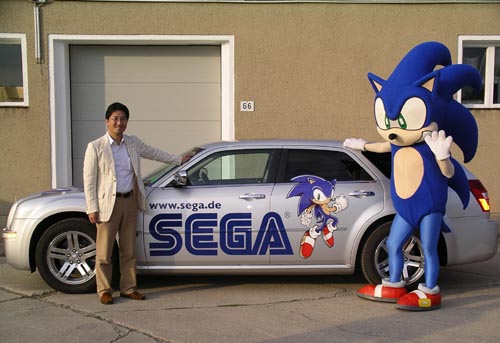
Holy cow, Yuji Naka's got some nice wheels (Lotus Elise).

3. There are three things that many websites/news channels focus on--News, Opinions, and Fan Stuff.  Focus on this.  There needs to be more "radio-esque" shows.  Have one or a roundtable of pundits report the news, take in some calls, give out some fan polls, make it feel like we're getting involved in the process.  Even if they dish out game reviews, allow some fans to offer a counter-opinion so the hosts don't develop this superiority complex.  Sites like GameSpot, Kotaku, and Joystiq get gamer feedback all the time--why can G4TV air some of their feedback too?

4. You can't cover ALL gaming with just one or two shows.  Gaming is such a BIG thing so you gotta break it down into many pieces.  How about some shows that are dedicated to specific aspects of gaming?  How about a show on FPSes.  Another on RTSes.  Another on MMO's.  Another on RPG's.  Another on sports games.  Another on--dare I say--racing games!  Throw out some news, a few reviews, get some fan involvement in there.  Also throw in some shows on gaming hardware, computers, new gadgets, etc.  Revenge of the Show doesn't count.  Air a new episode at least once a week, even if it's just for 30 minutes.  Get gamers of ALL interests involved.  Show 'em some love.

5. Channel some of the more successful online brands that have sprouted up recently.  Like Giant Bomb.  Or Machinima.  Or Mega64/Rooster Teeth.  They've put out some clever stuff.  There's a reason why people are browsing them more than your channel.  Like check out these YouTube vids--they're pretty interesting:

Warning: Bad language.

Dumbass kids on Xbox Live


Stuff about Black Ops

6. Gaming competition shows.  Holy cow--who would've thunk it?  Isn't gaming about competing against other people???  Get some MLG, EVO, or CPL coverage in here.  These events go on all the time.  Seriously, I have a friend at FIEA who watches Starcraft 2 competitive streams all day.  Or if the pro circuit is too heavy for you, make a casual gaming show like the old Button Mashing on GameSpot.

Button Mashing aired back in GameSpot's Jeff Gerstmann/Alex Navarro days (before Giant Bomb).  Basically, three people near the GameSpot offices came in for three rounds of competition.  First round--go through three console games and accomplish menial tasks like "kill 2 guys on Mega Man" or "get in a car in Grand Theft Auto" as quick as possible.  Fastest 2 players go to the next round where they try to identify a bunch of games from a bunch of spliced game clips.  The player with more correct answers goes to the final round where they challenge one of three GameSpot editors at their favorite game (i.e. Tecmo Super Bowl, Guitar Hero, Street Fighter II).  Beat the editor and you win some GameSpot swag.  Lose and you go home with just the GameSpot t-shirt.  Still a fun, simple idea that wouldn't take much effort to produce.


EDIT: There was once an old G4TV show called "Arena" which featured LAN events between teams of gamers.  It aired from '02 to '04.  Don't know why they canned it but that's G4 for you.  Making room for more Cops reruns.

7. Do your convention event/interview footage.  Like E3, Comic-Com, Blizz-Con, GDC, whatever.  But be rational report the news.  Talk with big shots like Gabe Newell or Cliff Bleszinski.  EDIT: Try to get interviews with Japanese guys too--yes, do the translator interviews with guys like Miyamoto or Inafune.  Then you can gloat but don't act like nerds.  Seriously, if you didn't get the memo by now--act like men, not like geeks with the mentality "I am nerd, hear me roar."  Avoid phrases like "noob" or "epic fail."

8. Bring in a show that contains nothing but user-created & submitted content off of YouTube.  Like some Super Mario Bros. movies, a gaming speedrun, a Minecraft creation, or a funny glitch.  Just some cool stuff for us to watch.  But no YouTube Poops, just say no.

9. No more Bit Monkeys.  The concept is okay but the humor is so juvenile...guys calling each other douchebags and hitting each other in the head with bats.  A missed opportunity.  This coming from a guy who's a game programmer who longs for the games of the 80's/90's.

10. AND ESPECIALLY NO AWARDS SHOW LIKE THE SPIKE VGA'S.  HELL F***ING NO.  If you want to do an awards show, don't blow it out with a bunch of self-gloating celebrities and other talking heads.  You'll make gaming look bad.

11. Air the old Mario & Sonic Cartoons, but only at 1 am since they can be cringe-inducing for 20+ year olds to watch at times.  And air The Wizard or some other vidya game movie like Super Mario Bros, Street Fighter, Mortal Kombat, etc. once a month.  HA, scratch the movie part.


12. Follow these steps:

1. Make the Mass Effect cartoon a reality.
2. Get lots of viewers.
3. ???
4. PROFIT.


13. LAST DITCH EFFORT TO GET VIEWERS.  BREAK GLASS ONLY IN CASE OF EMERGENCY.  Air My Little Pony.  I'm not a Brony but it will help you guys out, I swear.  At least it's not The Man Show so I'll let it pass...reluctantly of course.

 That's some EPIC WIN right there.

14. The Golden Rule: What will non-gamers think of our channel?  Will they look at us like we're serious about games like any other everyday interest (cars, sports, food, travel, politics, etc.)?  Or will they look at us like a bunch of morons caught up on a massive nerd-gasm orgy of crappy memes, Comic-Con cosplayers, and Mountain Dew?  Think about it.

------------

That's the list, have fun and please don't "frag the messenger."  If you do all these things, Adam may come back and you may restore some sanity to gamer culture.  Now get working, G4, cause times are changin'.

Friday, January 20, 2012

Report: History & Corporate Culture Of SEGA

Hey kids, I decided not to post on the 18th to protest SOPA...lol, not really, I just was too tired to post again.

I wrote a 7-page "case studies" for school.  Most of this you may know but here's the history of Sega for you.  Hope nothing's factually incorrect.  Just a nice read I suppose.

HISTORY & CORPORATE CULTURE OF SEGA

To this day, Sega stands out as one of the truly unique game publishers of our time. From producing some of the hallmark titles of our time to their lowest points, there is always something unique to the corporation. Unlike other “picture-perfect” companies like Nintendo and Microsoft, Sega paved the way with unprecedented hardware and quirky titles at the cost of miserable failures. With headquarters in San Francisco, Tokyo, and Brentford (UK), Sega’s culture throughout the decades still stands and is very much applicable in business today.

Sega was initially founded in 1940 as a small company in Honolulu, Hawaii. In 1951, it was moved to Tokyo and was given the name “Service Games.” The company distributed coin-operated devices such as jukeboxes and slot machines throughout Japan. Later it became involved in actual arcade development: Periscope, a 1966 submarine simulator, was the world’s first 25-cent arcade game. Eventually, in 1984, multibillion Japanese conglomerate CSK bought Sega and then the rest is history: a lavish history of arcade machines, home consoles, famous mascots, and a bad attitude.

In the mid 80’s, Sega had already released two home consoles: the SG-1000 and the Master System. While both paled in comparison to the NES in terms of popularity, it was Sega’s arcade division that truly made a splash. Back then, Sega of Japan hired a gentleman by the name of Yu Suzuki. Often dubbed as Sega’s answer to Shigeru Miyamoto, he was multitalented in terms of production and programming. After his first game Champion Boxing (1983), Sega granted him the opportunity to create his own game. Based on his experience with fast cars and bikes, Suzuki formed his own subsidiary of Sega (AM2) to produce Hang-On (1984), a motorbike arcade game which utilized parallax scrolling and a tilting bike cabinet. This game was wildly successful which led to create OutRun, After Burner, and Space Harrier, three games which used the same graphics engine and style. The uplifting music and vibrant colors set the tone for Sega from the start.

Suzuki’s endeavors would continue into the 90’s. Using his expertise in hardware design and in collaboration with General Electric Aerospace (later known as Lockheed Marin), his AM2 team crafted the “Model 1” hardware board which was primarily used in Virtua Fighter (1993) and Virtua Racing (1992), the first apparent fighting and racing games of the time. Suzuki’s serious tone to games would later continue into in the future and paved the way for Sega’s arcade dominance and design philosophy for some time.

Sega of Japan’s stroke of good fortune didn’t end with Suzuki. In 1991, programming assistant Yuji Naka was given the opportunity to program Sonic the Hedgehog for the Sega Genesis. Sega’s tendency to reward programmers with their own games proved to be a huge hit as the Sonic character has become synonymous with Sega itself. The gracious Yuji Naka became the head of Sega’s Sonic Team subsidiary. Sonic the Hedgehog’s contrast to Super Mario of Nintendo fame would later reflect the two cultures of both clashing corporations.

Sega’s image was bolstered in the form of in-house competition. A great instance of this is the “war” between Toshihiro Nagoshi and Tetsuya Mizuguchi. Each recruited the assistance of Sega’s subsidiaries—Nagoshi to AM2, Mizugushi to AM3—to create their own arcade racing games. Nagoshi headed up Daytona USA (1994) while Mizugushi headed up Sega Rally (1995). At the time, Sega faced rival competition from other arcade developers such as Namco (Ridge Racer) and Midway (Cruis’n series). Neither game seemed to faze these two as they were interested in making games for the specific purpose of outdoing one another. With Suzuki as a mediator, it’s no surprise that both AM2 and AM3 arcade games from this period were some of the most critically acclaimed of all time thanks to this dichotomy.

Meanwhile, Sega of America’s campaign was in full swing, beginning with the Sega Genesis. While SoJ took a more serious approach to game design, SoA was much more laid-back and unorthodox. Developers of all types attended meetings vociferous and boorish, throwing out tons of ideas as mediators took notes. Anything was fair game for them. Needless to say, Sega became the “bad boy” of the gaming world as they tried to take out their rival, Nintendo.

Sega reached out with an edgy irreverence that captivated the 18+ year bracket. Campaign ads were launched with phrases like “Sega does what Nintendon’t” and the trademark “Sega Scream.” Even one infamous commercial boasted the Genesis’ “Blast Processing” power which was a completely made-up term for the sake of advertising. The Genesis was inundated with anticipated titles/sequels like Streets of Rage, ToeJam & Earl, and Sonic the Hedgehog which paled in comparison with Nintendo’s “clean” games like Mario or Zelda. To add to its edginess, Sega was more lenient on mature content as the Genesis version of Mortal Kombat featured more gore than the Super Nintendo version. Also, Sega recruited Michael Jackson to help design some of their games (Sonic 3, Michael Jackson’s Moonwalker). The “cool” image stuck with Sega as focus groups proved that teenagers who owned Super Nintendo consoles were generally afraid to admit it.

However, Sega’s eagerness to produce a greater quantity of content (over quality) proved to be their Achilles heel. This began with their console development on the Sega CD (1992), and the Sega 32X (1994). Originally intended to be their own stand-alone devices, hardware developers simply produced them as add-ons to the existing Genesis console. Savvy gamers are usually aware that the games for said devices were abysmal. The Sega CD was originally sold at $299 and consisted of a library of mostly movie-based games such as Night Trap. The Sega 32X costs only $159 at release but didn’t fare much better. Both consoles were difficult and not worthwhile to develop for. While Nintendo wasn’t immune from mistakes (Virtual Boy), Sega’s mindset was clearly to cover up any flaws with slick advertising. Nintendo’s steady lead over Sega continued.

Sega’s eccentric behavior carried over to other companies. Around this time, Sega was looking for companies to merge or buy out. They even set their sights as high as Electronic Arts or Disney (very unlikely). Eventually, in 1997, they nearly agreed to a merger with Bandai (Power Rangers, Digimon, etc.). Weeks before the merger, Bandai backed out of the agreement, citing cultural differences that could obfuscate their productivity. Later, Bandai would merge with Namco. It appears Sega never got along with anybody, even those they tried to become partners with.

The Sega Saturn (1994) was a huge improvement over the Sega CD and 32X as it rivaled the Sony Playstation in terms of capabilities. Fictional Judo master Segata Sanshiro served as the console’s mascot in Japanese commercials, training with a giant Saturn console, throwing people causing them to explode, and beating up people (including kids) who refused to play the console. These edgy commercials were not aired in the United States, which further proves Sega’s “in-your-face” mentality. Yu Suzuki and the AM2 team were called on to help craft the hardware which paved the way for a new series of successful Virtua Fighter games. Virtua Fighter 2, in particular, was sold at a ratio of 1:1 with the Saturn console itself.

Later, Yu Suzuki would attempt to create his magnum opus, Shenmue (1999), a luscious open-world game following the adventures of a young man trying to solve the death of his father. It was developed the Saturn before it was ported to the Dreamcast years later. The development cost of both Shenmue 1 and 2 was in the range of $70 million dollars. While the Shenmue series was critically acclaimed for having that Sega “mystique,” it was the beginning of the end of Sega’s glory days.

In 1998, Sega thoroughly planned the release of the Sega Dreamcast in coordination with Microsoft. Heralded as Sega’s “most glorious moment,” the console boasted arcade-equivalent graphics and colorful new IP’s, such as Jet Grind Radio, Space Channel 5, NiGHTS Into Dreams, Power Stone, Phantasy Star Online, Skies of Arcadia, House of the Dead, Super Monkey Ball, Crazy Taxi, ChuChu Rocket, Ferrari F355 Challenge (Suzuki owns his own Ferraris), Seaman, and even the titular Sonic Adventure (Sonic’s first fully 3D foray). It also featured SegaNet, an online browser/gaming service powered by a 56K modem.

However, things would quickly turn for the worse for the Dreamcast. The upcoming Playstation 2 console by Sony was graphically superior and also featured a DVD player. Bernie Stolar, President of Sega of America from 1997 to 1999, collaborated with Sega to develop the Dreamcast but noted that several hardware failures and a higher price ($199 vs $249) could cause the device to fail. He also barred RPGs and 2D games from the Dreamcast since he thought they were too “nerdy.” He also bullied Namco into releasing Tekken games for the Dreamcast alone.  His predictions were correct but he was fired before the damage could be done. The Dreamcast was riddled with piracy and a poor development environment. Companies such as Electronic Arts backed out of working on the Dreamcast with the PS2 on the horizon.

The Dreamcast sold poorly in Japan and in Europe. Sega’s last-ditch effort was to provide American marketer Peter Moore with $500 million to advertise in the US. 2000 was dubbed the “Year of the Dreamcast.” Although the console became a cult classic, it wasn’t enough to bear the onslaught by the PS2. Sega permitted exclusive IPs to be published on other consoles. The Dreamcast ceased production in 2002. 10.6 million units were sold worldwide as of then.

To emphasize the Dreamcast’s failure, Sega lost from 1998 to 2002 a grand total of $1.5 billion (2002 inflation). To rub salt on the wound, Suzuki’s Shenmue series sold poorly and thus Sega “demoted” him in traditional Japanese business fashion. Sega managed to survive because of one of the greatest altruistic moves in gaming: CSK chairman Isao Okawa donated $695 million to Sega after his death in 2002. Though Sega lives, they’ve now been regulated to a mediocre third-party developer.

What led to Sega’s downfall over the previous decade? One of Sega’s ultimate strengths was in its hardware development. From Sega’s stellar arcade boards and cabinets from the 80’s-90’s to its striking home consoles, they were able to instill that unique culture through that medium. However, with the decline in arcades and the third-party transition, Sega lost a huge advantage over the competition. As a signal of change, Sega’s trademark indoor theme parks dubbed “Gameworks” began closing up across the world. The only explanation was that Sega, as a whole, was ambitious and willing to take risks and come up with completely unorthodox ideas, hence why the Dreamcast has such a stellar library despite the huge losses involved.

However, starting with their lackluster home consoles such as the Sega CD, Sega never really thought things through. This permeated through their corporate culture as they were forced to step back and re-evaluate the situation, only creating new hardware for arcade titles. Such quality, yet scarce titles such as OutRun 2 (2004), Ghost Squad (2004), After Burner Climax (2006), and Virtua Fighter 5 (2006) are attributed primarily to Suzuki’s AM2 team, widely considered to be the last true “gem” of Sega game development.

Things only became marginally better for Sega entering the 21st century. Sega was seeking mergers with various candidates, such as Nintendo, Microsoft, and Electronic Arts. In 2004, Sega agreed to a $1.45 billion deal in a merge with Sammy, a company heavily involved in manufacturing pachinko machines. Sammy’s CEO, Hajime Satomi, is rumored to be involved with the Yakuza and Sega-Sammy is used in his money laundering operations. Regardless of whether the rumors are true, Sega continued to wallow in the mire for years to come.

While Sega managed to earn meager profits throughout the mid 00’s thanks to their steady line of pachinko machines, very little good came out of it. Sega’s hallmark Sonic the Hedgehog series took a huge dive. Games like Shadow the Hedgehog, Sonic 2006, and Sonic and the Black Knight are considered abysmal even by typical video game standards, despite the fact the games managed to sell well. The situation became so bad that Sega of America President Mike Hayes had to assure the public that Sonic Team would hasten the production of new Sonic titles. To make matters worse, major Sega players such as Yu Suzuki, Yuji Naka, and Tetsuya Mizuguchi left the company to open their own studios.

While Sega may be developing few hallmark titles on their own, they’re seeing modest improvements entering the 2010 year. Mike Hayes has placed a specific emphasis on downloadable content and fresh new IP’s, stating that the profits from smaller, cheaper games can eclipse that of full-production titles. Classic arcade, Genesis, and Dreamcast games have been ported to modern online downloadable services such as Xbox Live and Steam, introducing old games to nostalgic gamers and new gamers alike. Sega has managed to publish some solid titles such as Bayonetta, Total War, The Conduit, Alpha Protocol, and Renegade Ops. They’ve also enlisted on the help from other studios such as Dimps and Sumo Digital to help create more quality Sega-related titles. Also, Sega still continues to produce some quality in-house titles, such as Yakuza and better quality Sonic the Hedgehog games.

Sega has adapted to the post-Dreamcast fallout with modest success. It is only natural that the market changes over time and Sega’s stubborn ways led to their downfall. However, they’ve held dear to their quirky nature since the very beginning. The fanbase still rallies around Sega, promoting new Sonic games on their own and creating fan content such as emulators of abandoned Sega arcade games. Even the eccentric Toshihiro Nagoshi, producer for Daytona USA, Super Monkey Ball, and Yakuza, proclaims that he will work for Sega for his entire career. All the meanwhile, Yu Suzuki and Yuji Naka continue to “supervise” at Sega.

Things can only get better for Sega from here. Once you’ve reached rock bottom, the only place to go from there is up.

Saturday, June 25, 2011

Yu Suzuki Steps Down...Again


Yu Suzuki, the esteemed producer of Sega classics such as OutRun, After Burner, Hang-On, Virtua Fighter and Shenmue, (LIKE EVERY ARTICLE MENTIONS), is leaving his managerial role at Sega in September 2011.  He'll remain with Sega as an "advisor," you know, like all good Sega devs like Yuji Naka who say they don't work there anymore but still have "ties" or something.  But this isn't new because Yu Suzuki retired from his R&D creative officer at Sega's AM Plus in 2009 so I guess the man has a habit of retiring himself multiple times before he gives up entirely it seems.

 He'll work at his own game studio, YS NET, where he's working on the new Shenmue City (or is it Town?) game and also that Kinect fighting game which has the chance to be the only good Kinect game ever made (it's Yu Suzuki we're talking about, come on...).

About his departure, I don't know if this means an end to Shenmue 3, OutRun 3, etc.  Yu Suzuki doesn't even work on Virtua Fighter anymore.  But whether or not Yu Suzuki works with Sega, I don't see him getting much done unless Sega decides to be a gentleman again, writes the checks, then opens up the treasure trove of old IPs they haven't touched in a while.  I hope that Yu Suzuki still gets the Shenmue IP so he can make part 3 even if Sega doesn't want it...

READ THE BREAKING INTERVIEW THAT EVERYONE'S BEEN WAITING FOR.  It is about Shenmue Town, programming languages, arcades, portable phones, and fighting games.  Don't get your hopes up for any Sega racing goodness.  Interesting quotes:

Yu Suzuki: Well, in 2008 I established YS NET, my current company. I'll be leaving my current job at Sega this September, and after that point I'll remain on as an advisor. So I've formally been with both companies from 2008 until September 2011. With the new company, I've been doing pretty much what I personally want to do myself.

In other words, Sega sucks.  LOLOLOLOLOLOLolololol...

YS: Well, in 2004 I was... what was the name of the group? The names changed a lot, but as far as the games are concerned, I was involved with STV [Sega Race TV], and also with Psy-Phi, a game that was announced but ultimately wound up not getting released. With STV I was just the producer, not doing any director stuff with it. On Psy-Phi, I was director until the point it was cancelled.

There was one other title as well, and that one also got stopped by Sega midway. But maybe that was for the better, because the Sega of the time was not in all that good shape, and they were shrinking down a lot of projects... maybe that part of it doesn't need to get written down. [laughs] I don't want to impact Sega's image.

I believe he was talking about Shenmue Online (which will be resurrected in the form of Shenmue Town, I  believe).  BTW, the only good MMO is a Shenmue MMO, nuff said.  Anyway, I would like to find out more about Sega Race TV but very little is known.  All I know is after OutRun 2, the dude hasn't done much since then...

YS: That's a hard question to answer, but the best way to do it, I suppose, is to say that you can make any game you like without the technology. Having advances in technology, however, does make it easier to evolve games, to take them to the next level.

Personally, I always want to make games that go hand-in-hand with new technology. Let's say there was some calculation that used to take two hours or so to finish. Then, suddenly, you find a new way to do it in software and hardware. That, in itself, opens up new doors and opportunities for games -- in AI, for example. It creates more opportunities for fun, the more CPU power you have. I think it can inherently lead to better games.

YS: It's really amazing that they've advanced the genre up to this point, I think. I mean, the first hardware we had to work with, we could generate only 300 polygons at the same time if we wanted to keep it at 60 frames per second.

See, I like Yu Suzuki's approach to technology back in the arcade days...he still made great games that made Sega untouchable at the time.  Nowadays, every single game is pushing a billion polygons per frame and then the whole point gets lost.  Speaking of which, remember the Soviet computer Virtua Fighter 2 chips?  Rofl.

YS: At the time, arcade hardware was the best out there in terms of performance, but after a while, that obviously ceased to be true. Sega proceeded along those lines for a while, but eventually they stopped, so certainly there's no way Sega is going to produce new high-performance hardware all of a sudden.

That's interesting to think about.  Sega's glory days ended with the Dreamcast and that's when consoles' graphics usurped that of arcades...so Sega lost one of their bargaining chips (sharp arcade games) and down with the ship he went.

[Talking about best programmers] YS: There were about four of five programmers at Sega who were really good -- I was the best, of course. [laughs] Or, at least, I was probably the best when it came to speed and optimization tricks.

First Yuji Naka, now Yu Suzuki.  PRO TIP: If you want to "make it big" with Sega (or the game industry in general) LEARN HOW TO PROGRAM GAMES and you win.  Seems like it anyway.  Thank you God that I'm actually on the road to being an expert programmer at FIEA.

[Talking about arcades] YS: That market certainly shrank too, didn't it? Well, it can't be helped! [laughs] You can't do much about it. There's lots of other fun things to do now -- YouTube, the internet, all kinds of things.

True...

YS: In the past, we had things like assembly, Fortran, Pascal, Forth... We still had a lot of languages to work with, and I worked with all of those at one point or another. I never really had much resistance to learning new languages. I learned BASIC in the very beginning, though, and I still love BASIC as a language.

The latest BASICs, like Visual Basic, have a lot of C-like aspects to them. From my personal standpoint, though, I don't have much need to write final production code any longer; instead I can concentrate on logic and algorithms and other things like that. As a result, I never feel constrained by changes in language.

You want to see assembly in action?  Oh ho...I actually programmed in assembly a little, but thankfully, most of us have shifted to C++.  Programming ain't what it used to be thirty/fourty years ago so Yu Suzuki definitely had it tough...

Calculator

           PAGE    ,132
           TITLE   CALC
CGROUP           GROUP   CODESEG
CODESEG        SEGMENT PARA PUBLIC 'CODE'
           ASSUME  CS:CGROUP,DS:CGROUP,ES:CGROUP
           PUBLIC  CALC

           ORG     100H

CALC           PROC    FAR
           JMP     START

;---------------------------------------------------------------------;
;                                      ;
;                 DATA AREA                      ;
;                                      ;
;---------------------------------------------------------------------;

           DB      'INTERRUPT NUMBER ='
INT_NUMBER     DB      61h

SCREEN_HANDLE  DW      0001h

MESSAGE        DB      'PEMATH is not resident',13,10
MESSAGE_LEN    EQU     $-MESSAGE

TAG           DB      'PEMATH'
TAG_LEN        EQU     $-TAG

;---------------------------------------------------------------------;
;                                      ;
;                 CODE AREA                      ;
;                                      ;
;---------------------------------------------------------------------;

START:
;---------------------------------------------------------------------;
;    TEST FOR PRESENCE OF CALCULATOR                      ;
;---------------------------------------------------------------------;
           SUB     AX,AX
           MOV     ES,AX
           SUB     BH,BH
           MOV     BL,INT_NUMBER
           SHL     BX,1
           SHL     BX,1
           MOV     DI,ES:[BX]
           MOV     ES,ES:[BX+2]
           ADD     DI,4
           LEA     SI,TAG
           MOV     CX,TAG_LEN
     REPE  CMPSB
           JE      CALL_CALC
           MOV     BX,SCREEN_HANDLE
           MOV     CX,MESSAGE_LEN
           LEA     DX,MESSAGE
           MOV     AH,40h
           INT     21h
           JMP     SHORT CALC_EXIT
;---------------------------------------------------------------------;
;    CALL CALCULATOR                              ;
;---------------------------------------------------------------------;
CALL_CALC:
           MOV     AL,INT_NUMBER
           MOV     BYTE PTR INT_CODE,AL
           DB      0CDh      ; INT
INT_CODE:
           DB      00h
           NOP
           NOP

CALC_EXIT:
           INT     20h

CALC           ENDP

CODESEG        ENDS
           END     CALC

Source code here.

YS: I think there will be a new generation, sure. Lately, the big makers pretty much make nothing but big franchise titles, right? Small companies can't compete with that sort of thing; projects with 4 billion [$50 million] or 6 billion yen [$75 million] budgets competing against those with 300 million yen [$3.7 million] budgets.

However, if you make nothing but these big titles, the game industry's going to falter because of it. So I think it's great that small developers can get into these new platforms and compete on there on a more level basis. It takes up less of their money, and if they get a hit, I think that'll lead to the directors getting attention from the media.

Bravo...I agree that these big studios are detrimental to the game industry...lots of large, generic games that sell hundreds of millions...I don't like that.  Smaller games mean more chances which means more unique games for us all.

YS: I pretty much have to negotiate with Sega on a one-by-one basis with that sort of thing.

YS: There are lots of projects in the works, but until I can get a budget for them... [laughs]

YS: But, you know, if one of them becomes a hit, then again, that becomes the step up to the next level. I have a lot of original ideas in the works.

In the words of Charles Barkley, PAY THE MAN!!!!  That's all I have to say from this article...Yu Suzuki, keepin it old-school...  Check out the addendum where I talk about this cool YT video I found about him.

Friday, June 10, 2011

Sonic's Making A Comeback...Shenmue, Not So Much

SEGAbits is a good website that I should read more often.  Anyway, this is worth mentioning.  Sega held an event called "Sonic Boom" at a club right up the road from E3.  Sonic fans gathered to wear funny hats, play Sonic Generations demos, drink Sonic-related beverages and cupcakes, meet Yuji Naka and Takashi Iizuka, and check out the Crush 40 concert.  This is some guy's account from SEGAbits.  Also, here's some screenshots from the Sega America blog.


To tell you the truth, as stupid as this event seemed, it sounded like a good time...  I'm starting to feel good for Sonic fans again.  Go get 'em, guys.  EDIT: Might wanna read part 2 of Sonic Boom here.

Also, Sonic on the cover of Nintendo Power.  SEGAbits, mind if I steal your bandwidth?  Thanks!


There's something weird about seeing old-school Sonic on the (rather plain) cover of Nintendo Power...but it just means that SONIC'S MAKING A COMEBACK, BABY!!!  Move over Mario, move over Link, move over Samus, move over Pikachu...

------------

Alllllrriiiggghhhtttt...enough with that, here's more SEGAbits for you.  This is an article.  Mike Hayes, the President and CEO of Sega West (Europe & America), was talking about Shenmue at a CVG interview (nice of the man to spend time with the people...). 

“Trust me,” he continued, “We hear loud and clear about Shenmue, and we’re not going to close our ears to it."


“To be fair to us we’ve done Sonic 4, Afterburner, Golden Axe and Shinobi on 3DS. We do listen. It’s not like we’ve got our fingers in our ears, we take that very seriously and value the small but vocal people. Sonic 4 was the perfect example that we’re listening to those guys. Generations is too – and that will show when people get to see it for themselves.”

Me and a lot of other people always cheer on Sega in hopes that it'll influence them.  And it is GOOD that we have a CEO who will point out Game X, Game Y, Game Z and say, "Look, we're trying."  Good!  Talk is cheap, but better to have talk than to be blissfully ignorant to the fans!

EDIT: Just realized this is the same Mike Hayes that said we'd get 18-24 Dreamcast ports by 2012.  So that's not good although that was a long time ago so MAYBE we'll overlook this.

Then this is what the article writer goes on to say:

But rebooting a series is only half the battle Mike, it’s all well and good to say ‘hey look we gave you Golden Axe and Sonic 4’ but the simple fact is that if you are going to reboot a series it has, I repeat has to be done with care… If you’re going to just hand out your classics to unproven, bulls*** American developers that usually work on license titles (like the Shinobi reboot) then I’m not sure any Sega fan will be thanking you for that!

Well, not very flattering of (some) American devs, but he's right.  You only get ONE chance (maybe two, like OutRun 2 or Sega Rally) at a remake/port.  For instance, a developer can't come out with, say, a new Jet Set Radio game which sucks (or at least has moderate yet inexcusable flaws) and then say, "Oops, we screwed up, let's remake the game from scratch again."  You might be able to release patches or DLC to salvage it but devs just can't mull over the same idea for too long without losing everyone's interest (and thus profits).

I’m more than happy to see Shenmue continue like most old Sega IPs. In fact I would be extremely excited, it is my favourite series of all time! But if it was farmed out to some developer I’ve never heard of, heck if it came from ANY developer besides AM2 then Mike, frankly I don’t want it…

Does anyone trust anything besides AM2?  Anyway, I highly doubt they'll trust Shenmue 3 with anyone other than Yu Suzuki and AM2.  I don't think Sega will go that low and give it to some chump studio...

But that's all well and good, it's common sense, etc.  Legendary game series deserve top-notch care...

------------

And going through these stories makes me feel good.  I'm going to say this and it may shock a few of you: I'm a little more optimistic about Sega these days thanks to both the company and the fans.  Well, they're not perfect (Binary Domain, Dreamcast ports, etc.)  , but they're not screwing around as much these days.  We're fortunate cause we have home ports of Crazy Taxi, Sega Rally 3, and OutRun 2.  We've also got Daytona 1 & 2 plus Scud Race on emulators.  We got Sega & Sonic All-Stars Racing.  Sonic games are getting better.  Massive amounts of new Daytona 2 media.  You know what I'm talking about.  WE CAN DO IT, SEGA!!!

Sunday, May 8, 2011

Sega Dreamcast 2: I Have No F'n Idea...

Oh, hello.  This is a YouTube video posted on April 30, 2011.  Some guy is talking about speculation of the Dreamcast 2.  Now this video really doesn't contain anything other than text and a song from Metropolis Street Racer, so I'm just gonna write down what the video says.

The Story So Far...

In August 2007, SEGA filed an application with the US Patent and Trademark company to protect the Dreamcast trademark.  The details of the patent included devices that the original Dreamcast didn't use such as "flash memory cards" and "interactive controllers with handheld pads and floor pads or mats."  Sega also filed two new controller patents which were approved in 2009.  One of them is a motion-sensing remote, and the other is a Saturn-like controller with added motion sensors. 
(These controller patents are true...at least the '09 ones anyway.)

According to the website "FGNonline," SEGA made the following statement shortly afterwards; "With Nintendo Wii hitting retail and gaining worldwide superstardom of the likes never witnessed, SEGA once again got to work immediately on a new system, with orders from the boss himself, Satomi-san.  This system shall be an HD casual console and is designed to compete with the successor to the Wii."
(Actually, this is COMPLETELY FAKE, FGNonline is a phony website, see the details here.)

*two pictures of Sega-Sammy Dreamcast 2, first is presumably fake, second is fan-made concept; both are flat white boxes with trays on the side that suck in the disc like the Nintendo Wii*

In January 2009, SEGA also filed two new hardware patents for the arcade boards "Ringwide" and "Ringedge."  In the patents, it states that these boards are designed "for use with video game software and stand alone video game machines."  This suggests that SEGA is planning to develop a new console based off these arcade boards. 
(Suggests, my ass, it's pure speculation that we'll get a home console out of it.)

*picture of Ringwide and Ringedge hardware in glass case* 
(These really do exist.)

This makes sense, as the Dreamcast was also based off an arcade board called "Naomi."  In 2008, SEGA of America CEO Simon Jeffrey made a statement saying that SEGA had "no plans for a Dreamcast 2."  He was released shortly afterwards.  All of this coincides with a statement made in October 2010 by Sonic the Hedgehog creator, Yuji Naka, saying that he wishes to work on Dreamcast 2." 
(Yuji Naka doesn't directly work for Sega anymore...he started his own side studio in 2006 called Prope.  And Simon Jeffrey getting canned, no one knows...maybe because he had a bad habit of leaving the men's toilet seat down so the board of directors took him out.)

The latest rumors are that the Dreamcast 2 will be launched on 12/12/12 and revealed later this year or sometime in 2012.  While this is just rumors and speculation, there is strong evidence to suggest that a Dreamcast successor is in the works.  Stay tuned for more details in the future! 
(12/12/12...damn, only nine days to the Dec. 21 party.)

"You kiddin' me?"

Lots more info about Ringedge and Ringwide boards here.  It says this on the "About" page:

This blog is all about the new upcoming sega ringedge and the sega ringwide They are both consoles that are by sega that are going to be released in the holiday season of 2010. The ringedge will be a HD console, and the ringwide will be a portable arcade board which is a computer that plays arcade video games. The first game thats going to be on the ringedge is Border break, border break is a 10 vs 10 arcade robot game when theres a red side, blue side, 10 robots on each side and the goal is to destroy all the robots in the oppoite team.This is a blog, created at www.blog.com, if you wish to make your own blog just make an account at www.blog.com And is about Sega info

But really, that page has more information to keep you occupied.  Very insightful blog from a guy who couldn't piece together a paragraph with proper capitalization and grammar.

These are the RingEdge and RingWide consoles.
Click here for the RingEdge/RingWide specs.

For the record, Sega Racing Classic runs on the RingWide board so that's nothing new.  That and some weird Japanese Robot/Fighting games that I've never heard of.  The RingEdge board is more powerful than the RingWide.  See Border Break for arcades, released in 2009 that doesn't take full advantage of the RingWide's capabilities.  Supposedly, Sega's just using the boards to revive the arcade business although I haven't seen crap come from those boards yet.  They have Microsoft Windows embedded within them to make programming for said boards easier.

I claim to know very little about the subject, but other than Sega patenting a few iPod thingies here and there, I don't think there's much going on...that blog hasn't mentioned much in the last year or so.

I'm not buying it until I see it.  New hardware doesn't mean new consoles.  Remember Shenmue 3?  Nagoshi talking about Daytona 3?  Eighteen XBL Dreamcast ports?  Also, I think it would be silly to name the console "Dreamcast 2" when the only Sega consoles with a "2" are the SG-1000 and Master System, both of which are over 25 years old.  But that's just fan speculation.

Will the "Dreamcast 2" live?  WHO THE HELL KNOWS.

But really, I said this from the beginning and I still believe it...it's probably a bad idea.  Nostalgia is good but don't pick fights you can't win.  Sega doesn't seem to exert much energy on "good" games anymore.  Like why do we see all these crap Sonic games and flimsy DC ports with no extras?  Sega may have lots of money, but that's a huge hill the climb if they want to make their own console, release a bunch of new Sega games, and actually make long-term profits off it.  Really, they better damn well roll out the red carpet with new Sega games, like uh...a new Daytona USA???  You know what I'm talking about.  But if it ain't happening, work with the Xbox 360--it doesn't bother me too much as long as you release the GOOD games first and foremost...

Damn, I know this topic is OLD'D but now that you know already just to get the gist of it, let's not go any further or I'll lose all track of everything.

Saturday, May 7, 2011

Why I Go To Extremes (Graduate Schools)


Well maybe I do to to extremes.

Anyway so I've been thinking about this for a while and I'm going to get rid of the "Just Say No To Burnout/Split-Second/FnF" pics cause overall, I'm trying to build up something (Sega racers), not tear something down (bad racing games).  I get mad, I don't like some of these things, but I think that may be going over the line (remember, take a bit of sarcasm, not pure unadulterated hate with these things).  Don't need to look too sanctimonious here.

EDIT: I'm sorry I went to extremes again.  It becomes necessary in the course of human events to "warn" users of my disdain for these games so a smaller, snazzier pic remains.  But one that is much more kind I might add.

Fine, you want to go play Burnout?  Hey, I'm just saying you might be missing out on SEGA RACERS and that's a shame.

And about the Iggy Koopa pic...well, we can't get rid of that because we know Iggy is bringing the sexy back so he's not going anywhere.  Lol, I'm just kidding.

------------

So anyway...I am done applying to FIEA.  Read about this gaming college here.  So May 6th was the final day to apply.  If you pursued the Production track, you had to submit an essay of your own game concept within a week's time limit.  If you pursued the Programming track, you had to submit some of your best source code and that's that.

Up until two days before the deadline, I was still dead set on the Production track.  I was plugging away at this essay with which you had some freedom to come up with a game.  I'll tell you what I was planning on...I was writing about a new Monster Rancher game.  Yeah, I want a new Monster Rancher game, now that would be cool.  Maybe I'll write about my ideas soon.

But I got stuck with two days left and then I thought to myself, "What am I doing???"  I don't think I want to do the Production track after all.  So rather than write a monotone essay that they wouldn't like, I found a treasure trove of source code, comment scanned a few things, threw it in a pile, then e-mailed off as my Programming portfolio.  The recipient said, "Awesome!" and then that's that.  Considering the odds of getting into the school as a programmer was MUCH higher, I think that may have been a "gutsy" call.  Then I would be shipped off to Florida where I'll spend a year (and $30,000) staring at a computer screen twelve hours a day.

I had this idea beforehand that producers were the leaders and programmers (aka code monkeys) did all the dirty work.  Like the old "chiefs and indians" metaphor.  And then rather than play the role of subservient loser my entire career, I could call the shots then go to Sega and make new Daytona games and then save all video games as we know it.  But that is sad to pass Programming because there's a few things:

1) My skill set is accomodating to the programming experience.
2) I like programming.
3) It's a tangible job that can keep me employed.  This is contrast to producers who run around saying, "Make this, make that," and then they PAY the man for giving them marching orders
4) I wouldn't say I'm TOO creative.  My goal is mostly to revamp existing series and make them more solid and fun to play, not to come up with arbitrary games like Psychonauts and Katamari Demacy.

As a programmer, I thought I'd have no mouth and that I must scream because my entire fate was decided by a cabal of producers who want to push buggy movie adaptations upon the market that'll be forgotten in a month because that's MONEY.  Well, I do have a mouth and I'll scream at these people (politely, of course).  Like, "Hey, maybe we can do this differently and it would be better," or "I've got some ingenious ideas that would be awesome," and then there I go.

EDIT: Just read in Yuji Naka's Wikipedia entry that he started his career for Sega as a programmer.  He programmed the original Sonic the Hedgehog and then after that, it was off to the races.

It's like The Sims in that you have to get a job at the bottom of the career ladder then work your way up.  So go to school, go to work, keep applying to Sega, get a job there, go to Japan, persuade AM2 to do it, then the rest is history.

So just go to FIEA, take programming and production classes, see what you can learn, then we'll go from there.  I'd be lying if I said I was at ease over this, but you gotta do something eventually.

Thursday, March 31, 2011

UK Resistance: Rest In Peace & Funny Posts

Old Sega fansite UK Resistance has announced that it will receive no more posts.  Site will still be up (I think), but with no more updates.  You have other sites like this one claiming it's shut down so it seems believable to me.  I don't think it's an April Fool's Joke since it was announced March 29th.

Now lately, they've been posting crap about Sony and Nintendo so it's like they were getting bored with it.  Anyway, we remember the Blue Sky in Games Campaign and 50 Reasons to Buy OutRun 2.


Beware that UK Resistance is not a site for the kids cause of the curse words so this is your warning.

Some of my favorite old posts.  I was actually compiling a list a while back, but I was lazy.  So I'm gonna post this now:


The OutRun 2 tips book!  Also Doom III and Fable.


And finally...a Christmas story about OutRun 2--A Christmas Carol style.  Save us from the Need for Speed games!  Funny how that was years ago.  Nowadays, it's Burnout & Split/Second.

...

That's about it for now.  I sure hope the site doesn't go down forever or all these picture links will be ruined and I'll be super-pissed.  Farewell, mates.

Thursday, March 17, 2011

Japan/Sega Relief Fund, Nagoshi In Another Awkward Situation

But first, Happy St. Patrick's Day!!!

------------

Well, the Japanese disaster is apparently past its climax (I hope) and that they can hopefully contain the damage.  There's freakin Red Cross ads all over the place, but I did donate money before it became a trend.  Hey, either that or fly over in a jet to Japan in order to haul rubble.  I have cash, but I really don't need it.  Everything I buy is stupid anyway.  So pray AND pay.

EDIT: Removed the section about the power plants, doesn't really matter.

I wonder if life in Japan is okay elsewhere.  I was playing some CoD: Black Ops earlier and on the world map, I saw some white cloud in south Japan and even a few dots in north Japan (way north).  So can you tell the state of a country just by how many people are playing online video games??  I guess so.

I know there are other countries that are ailing like New Zealand, Haiti, and Libya, but I really don't want to get into schematics of the news cause this isn't the blog for it.  You gotta try to help as many people as you can; that's all there is to it.

------------

Ok, so about Sega.  Yu Suzuki and Yuji Naka are okay.  Haven't heard about many other people but if there were any big losses, we'd know about them already.  Stay safe, Sega HQ.  Move all your source code to an indestructible bunker.  Too bad you already lost the Daytona USA source code, oh you idiots.

Sega (and Sammy) are donating 200 million Yen to the relief effort.  This equals $2.44 million or 1.53 mil GBP.  Now where the hell does Sega get that kind of money???  Like I said, Sega is an enigma--they may be printing their own money for all I know.  Also, Sega Europe is donating a week's worth of money from iPhone app Football Manager Handheld 2011 which is good too.  I mean, I can't see any Japanese company donating nothing to help their country, but Sega is a pretty cool guy and doesn't afraid of anything.

Also on the donors list is Namco (100 mil Yen), Nintendo, and Sony (both 300 mil Yen, outclassing poor old Sega again).

------------

And this is one more thing I noticed.  Now I haven't heard anything from Toshihiro Nagoshi since the disaster, but I know he's working on two games: Yakuza 5: Of The End and Binary Domain.  Now both display a dilapidated image of modern-day Tokyo.  You come up with your own impressions in the light of this disaster:


You've got to be kidding me.  EDIT: Enough with the apocalyptic crap already, make some HAPPY games and maybe you won't have to remind us of the awful news when we play your games for FUN.

Saturday, October 9, 2010

Sega Stuff Again And An "Angry Mission Statement"

I'm really trying to enjoy my five-day weekend, but I just lost my train of thought so I'm gonna go over some simple stuff.  This is a crap post but let's go anyway:

------------

Asked for "the biggest problem [facing] current games," Smith (creative director of NBA Jam) hit out at "the actions and attitudes of some of the gamers out there.

You know who they are. If they spent less time spewing ignorant hate on the boards and in online games, and more time rallying behind the great games they love and helping to build a thriving community that welcomes everyone that shows up to play with them - everybody wins. Nothing wrong with a little smack talk here and there, just wish gamers respected each other more.

http://kotaku.com/5659542/nba-jam-dev-just-wants-us-all-to-get-along

Wow, I've thought a lot about what to say to this, but let's make it brief...

I don't like how many gamers are jaded, just blind haters, bash each other, bash games, cut that crap out.  If you don't like games, at least bring some logic to the table.  I admit to not liking plenty of games (Cruis'n/FnF, Burnout, overly violent games, etc.), but I'll tell you why and I'll be respectful to you if you like them.  I'm not taking away from free will--I just let you know what I have to say.  I'm trying to be rational here, but when I feel passionate about something, I'm gonna lay it all out on the table.  If I go overboard in the negative, then I have a purpose for it.  If you don't like what I have to say, then I'm up for an intelligent discussion.  I want to know what others think.  But really, the main point to the average gamer is to stop acting like a jackass--be a man, debate the issues...
 
------------
 
http://www.mcvuk.com/news/41217/Sub-standard-Sonics-de-listed
 
Average to poor Sonic games have been delisted.  Some VP of Europe, Middle East, yada yada of Sega says:
 
“We have to do this and increase the value of the brand. This will be very important when more big Sonic releases arrive in the future.  We could make a lot of money on back-catalogue Sonic titles, but let’s keep the number of Sonic games available under control. Otherwise you can have cannibalisation. If there are ten Sonic games on the shelves, with people seeing Sonic Rush DS or Sonic Rush Adventure, this may not help our overall strategy.”
 
I think it would've helped if you made good Sonic games in the first place and saved us from this mutiny.
 
------------
 
http://www.1up.com/news/sonic-creator-dreaming-of-dreamcast-2
 
Yuji Naka wants to work on a Dreamcast 2.  Can it happen?  I don't know.  If Sega had the fortitude to bust their ass on a new console and produce a ton of games for it, then maybe, just maybe.  But I don't see Sega taking that big of a leap any time soon.  If Sega has to go third-party, then I'm fine, just as long as we focus on making good games first.  Like how's that new Sonic game working out for you, Naka-San...